Lowest price here7 h
7 hMaui: Guided Hike of Haleakala Crater with Lunch
★ 5.0 · 9 reviews
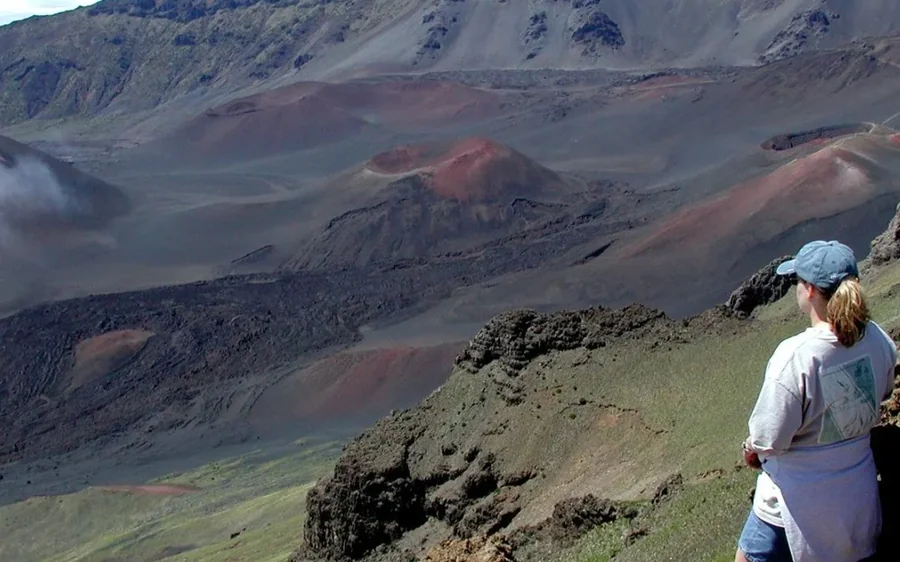
- Seven hours, two trails inside the crater
- Lunch included
- Walk on a lava trail
- Free cancellation
$208$29.71 / hour
Check availability→ Active or not
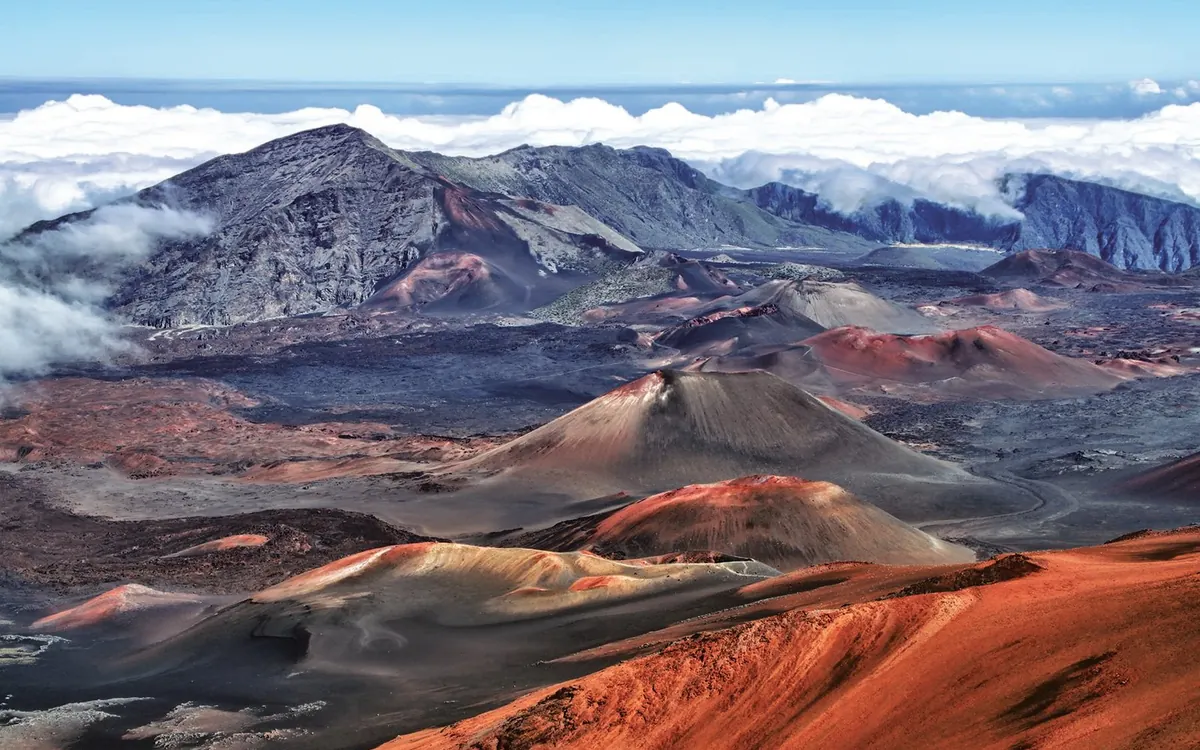
Sooner or later everybody planning a week here types some version of the Maui active volcano question into a search box, and the answers that come back are usually either a geology lecture or a scare. It deserves neither. Haleakalā is a shield volcano — a broad, gently sloping mountain built up by lava flows rather than a steep cone — and its summit stands at 10,023 feet, or 3,055 metres. It is dormant: sleeping rather than gone. The operators who take people up it describe it in exactly those words, and so do we. What you go up to see is not smoke or fire but shape: an enormous summit valley with cinder cones standing on its floor, red and grey ground that looks nothing like the rest of Hawaii, and a plant that grows here and nowhere else on earth. This page answers the Maui active volcano question plainly, and then tells you which listings put you on the ground where the geology is visible.
Quick answer
The short answer. Haleakalā is a shield volcano, and it is dormant — sleeping, not extinct. So when people ask the Maui active volcano question, the honest reply is that the island has one great volcano, that it is quiet now, and that what makes it worth a day is its scale rather than any activity. You can stand on the rim at 10,023 feet, walk down onto the floor of the summit valley on $208, or see the whole shape of it at once from the air on $396. Free cancellation applies on every tour on this site.
The one thing to understand
Most of the confusion in the Maui active volcano question comes from the picture the word volcano puts in people’s heads: a steep cone with something coming out of the top. That is one kind of volcano. Haleakalā is the other kind.
Shield, not cone. A shield volcano is built by lava that runs rather than lava that piles, so it spreads outward as much as upward. From a distance it does not look like a volcano at all; it looks like the whole eastern half of the island gradually leaning upward, which is precisely what it is. The gentleness of that slope is why there is a road to the summit at all, and why the drive takes as long as it does: you are crossing a mountain sideways as much as climbing it.
Dormant, in the plain sense. Dormant means sleeping. It does not mean finished, and it does not mean anything is expected to happen while you are there. That is the whole of what we will say about it, because it is the whole of what we can say honestly: we are a site that reads tour listings, not a volcano observatory, and we are not going to publish dates we cannot source. If the Maui active volcano question is a scientific one for you rather than a travel one, the people to read are the geologists who monitor these mountains for a living.
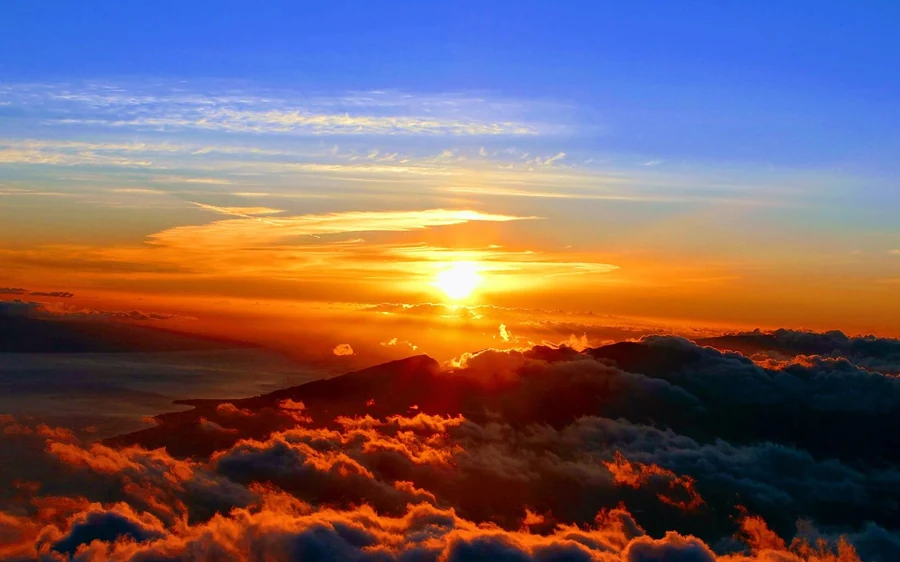
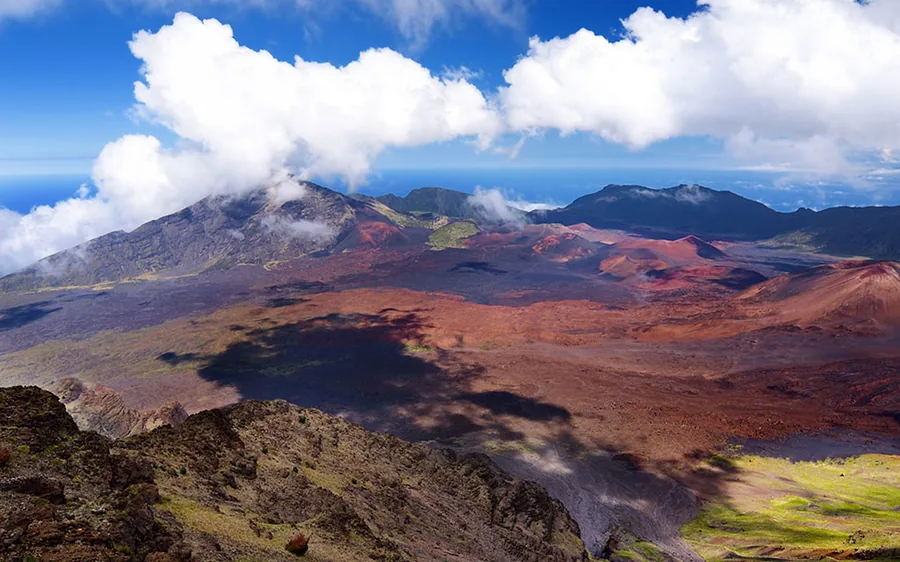
What you actually see. Nothing dramatic and everything remarkable. The ground at the top is red, grey and black, arranged in a way no other landscape on the island is arranged. There is a valley at the summit big enough to hold hills inside it, and those hills are cinder cones. There is a horizon of ocean on three sides. And depending on the hour and the weather, there is a floor of cloud somewhere below you that makes the whole thing feel like a different planet.
The crater that is not a crater
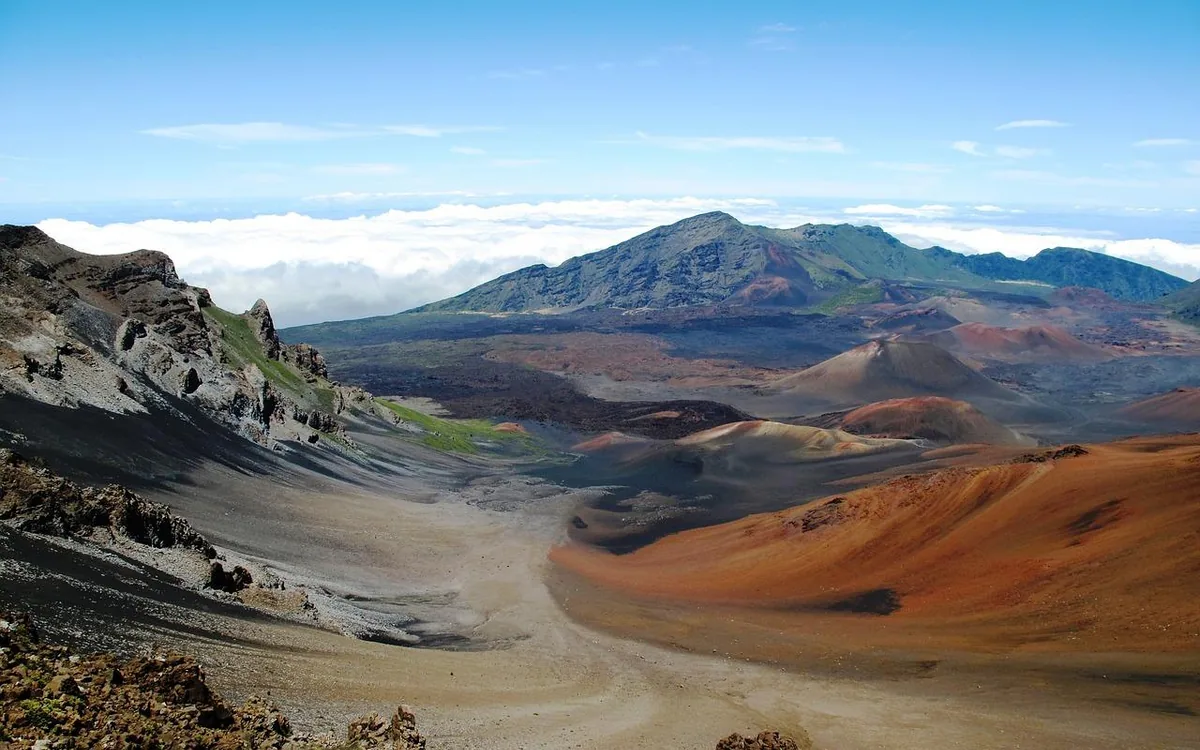
The word people use for the top of the mountain is crater, and it is worth knowing what is really up there before you spend a morning looking at it.
It is a valley, and it is enormous. The depression at the summit is not the tidy bowl the word crater suggests. It is a vast open basin, wide enough that distances inside it are hard to judge from the rim — people routinely mistake an hour of walking for ten minutes of walking, which is one good reason to be down there with a guide rather than a guess.
The cones. Standing on the floor of that valley are cinder cones: smaller, steeper hills of loose volcanic rubble, red and rust and grey, each one a former vent in its own right. They are the single most photographed thing on this mountain after the sky, and they are the reason the floor looks like an illustration from a book about somewhere else.
Getting onto the floor. $208 is the listing that does this properly: seven hours, a certified guide, two popular trails along the crater, a walk on a lava trail and a picnic lunch. It is rated 5.0, and it is the lowest fare on this site for the summit itself. Walking on a lava trail is the moment the Maui active volcano question stops being abstract: the ground underfoot is literally the mountain’s own material, loose and sharp and hollow-sounding.
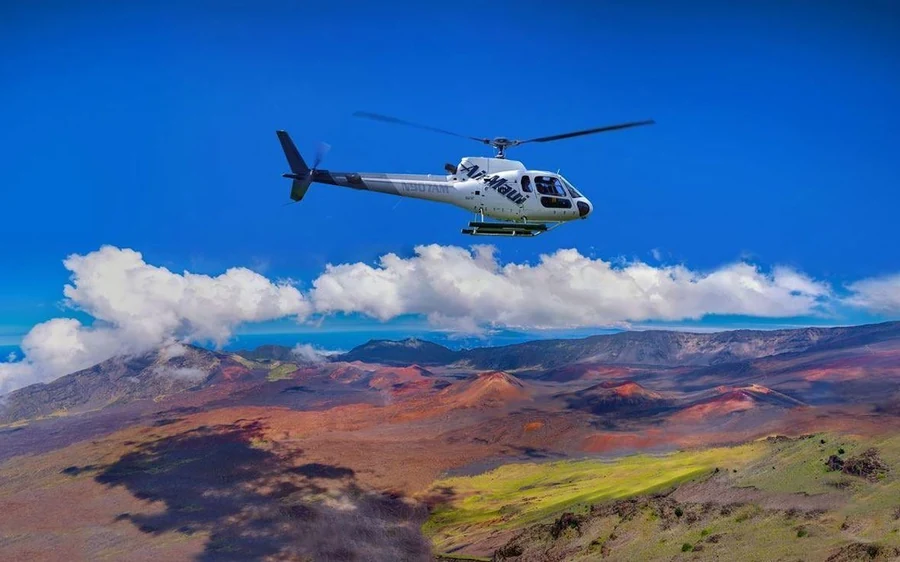
Seeing the shape whole. From the ground you see part of it. From the air you see the geometry. $396 takes off from the heliport to the summit of the dormant crater and descends over East Maui to the Hana rainforest, waterfalls and the North shore, in forty-five minutes, rated 5.0 on 21 reviews. If the shape of the mountain is what interests you, that booking answers more of the Maui active volcano question in three quarters of an hour than a day on the rim does.
Where the geology is visible
One row per listing, in order of what it costs. Anyone arriving at the Maui active volcano question from a search box can start here: the last column is what the listing itself names, not what we imagine is in it.
| The listing | Price here | How long | What you are looking at |
|---|---|---|---|
| Sunset llama trek6 reviews at 5.0 | $198 | 1h 15m | The outer slopes at walking pace, with views across to the West Maui Mountains |
| Our pick: guided hike of the crater9 reviews at 5.0 | $208 | 7 h | The floor of the summit valley, a lava trail underfoot and the cones around you |
| The early morning at the rim665 reviews at 4.7 | $236 | 9 h | The summit from the rim, with the history and culture of the mountain explained |
| Summit, Iao Valley and a distillery18 reviews at 4.9 | $259 | 12 h | The summit plus Iao Valley and the Iao Needle, a different rock story entirely |
| Forty-five minutes by air21 reviews at 5.0 | $396 | 45 min | The whole crater from above, then the rainforest and waterfalls of East Maui |
| The three-wheeler you drive4 reviews at 3.6 | $503 | 1 day | The mountain road itself, its panoramas and the botanical gardens along it |
What lives on a sleeping mountain
The part of the Maui active volcano question nobody thinks to ask is what grows on a mountain like this, and it turns out to be the most surprising thing up there.
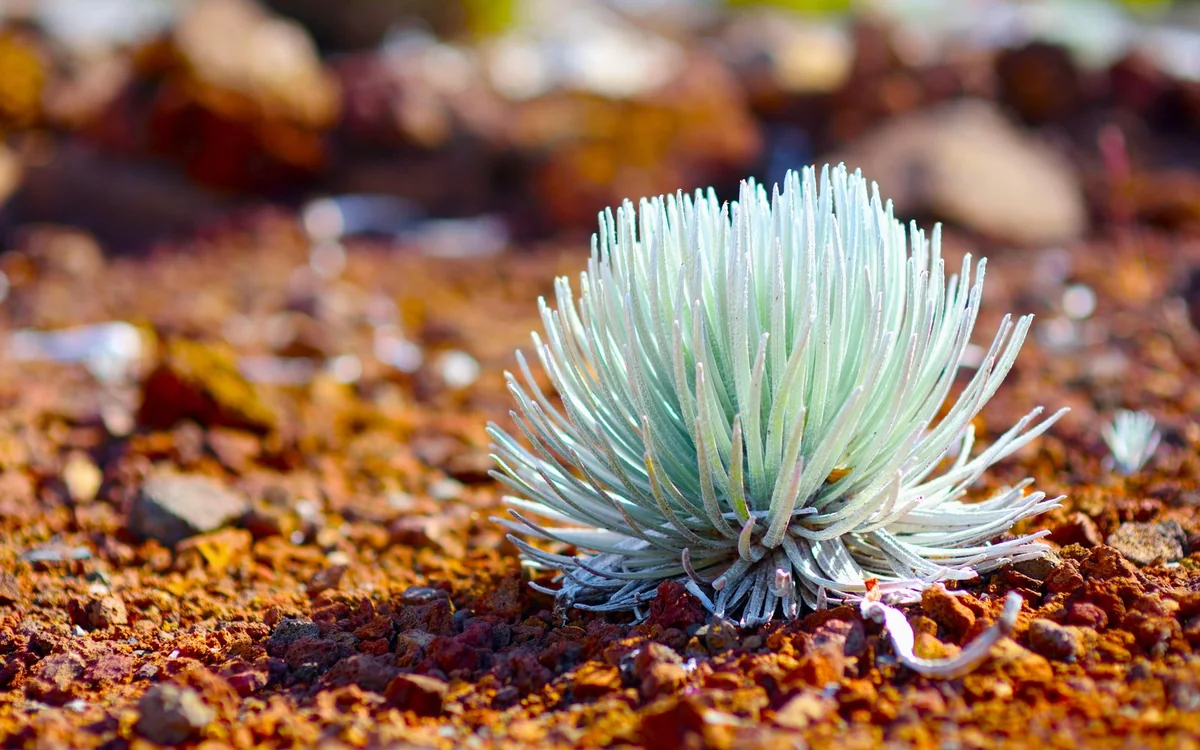
The silversword. Known in Hawaiian as ʻāhinahina, it is a rosette of narrow silver leaves that grows on this volcano and nowhere else on earth. Not rare here and common elsewhere — nowhere else at all. It sits on bare volcanic ground at altitude, in cold nights and hard sun, and it looks less like a plant than like something assembled out of metal. Seeing one is the quietest highlight of the summit and the easiest to walk straight past.
The nēnē. The Hawaiian goose is the bird of this national park, at home on these high slopes. If you see one, you are seeing a species that lives on these islands and nowhere else, going about an ordinary morning on ground that has no soil worth the name.
Why it matters to the walk. Both of them are the reason the rules up there are strict about staying on trails. A guided walk like $208 exists partly so that somebody who knows the ground decides where feet go. On the lower slopes the same instinct shows up differently: $167 includes a talk on the conservation work that keeps this landscape and its culture intact, which is an unusual thing to find written into a two-hour booking.
And the sky, since we are up here. At 10,023 feet you are above a great deal of the atmosphere and all of the island’s street lighting. That is why the summit is known for its clarity and why the observatory domes sit on the ridge. It is also why the cold is what it is: thin air holds very little of the day’s heat. None of that is what people mean when they type the Maui active volcano question, and all of it is a better reason to go up.
Seven plain answers
Short answers, all of them either geology or something written on a listing page.
Dormant is the word used for it: sleeping rather than gone, and it is the whole of the Maui active volcano answer. The operators who run trips up it describe it that way, and there is nothing about a day at the summit that requires any more thought than dressing warmly enough.
Not flowing, no. What there is instead is lava that cooled long ago and became the ground: a lava trail you can walk on with a guide on $208, cinder cones you can stand at the foot of, and slopes of loose rubble in colours no garden centre sells.
Yes, on foot and with a guide. $208 spends seven hours on two popular trails with a certified guide and includes a picnic lunch. Distances down there are deceiving from the rim, which is the honest argument for booking a guided walk rather than improvising one.
10,023 feet, or 3,055 metres, straight up from an ocean. That is the reason for both the cold and the clarity, and it is the only number on this page that changes anything about what you should pack.
Red, grey, rust and black, in large sweeps, with cones standing on the valley floor and nothing green until you are a long way back down the slope. People describe it as lunar, which is unfair to it — the moon has no cloud floor.
No. What affects the tours is weather and the national park’s own rules: its separate reservation for arrivals between 3:00 and 7:00, and the entry fee, which is charged apart from the tour fare. Both are on the listing pages.
It is the one this island is built around and the one every listing on this site goes to. Other islands in Hawaii have their own mountains with their own stories, and they are somebody else’s page, not ours.
Every trip, current fare
The other way to read these fares: not what the booking costs, but what an hour of it costs. It is a blunt measure — forty-five minutes of flight and seven hours of walking are not comparable hours — but it does show where the short bookings sit against the long ones once the clock is taken into account.
| Tour | Length | Price | What is included | Cost per hour | Rating |
|---|---|---|---|---|---|
| Maui: Guided Hike of Haleakala Crater with LunchThe fare this site quotes from | 7 h | $208 | Two popular trails with a certified guide, a lava trail and a picnic lunch | $29.71 | 5.0 · 9 |
| Maui: Haleakala National Park Sunrise TourOur top pick on this site | 9 h | $236 | Hotel pickup, the history and culture of Haleakalā, and breakfast | $26.22 | 4.7 · 665 |
| Maui: Best of Maui/Haleakala - Sips, Sites & BitesTwelve hours, rated 4.9 | 12 h | $259 | The summit, Iao Valley and the Iao Needle, lunch and a distillery tour | $21.58 | 4.9 · 18 |
| Hana Rainforest and Haleakala Crater 45-min Helicopter TourForty-five minutes, rated 5.0 | 45 min | $396 | From the heliport over the crater, the Hana rainforest and the North shore | $528.00 | 5.0 · 21 |
| Maui: Haleakala Volcano Summit Polaris Slingshot TourA three-wheeler you drive | 24 h | $503 | Driving a three-wheeled Polaris Slingshot up the mountain road and back | $20.96 | 3.6 · 4 |
| Maui: Sunset Llama Trek on HaleakalaSeventy-five minutes, rated 5.0 | 75 min | $198 | Leading your own llama along the slopes, with views to the West Maui Mountains | $158.40 | 5.0 · 6 |
If the Maui active volcano question is settled and the summit is still not the part that appeals, the lower slopes have their own two hours.
See the Upcountry listings→Book direct
The guided walk onto the valley floor, the forty-five minutes that show the shape whole, the most reviewed morning at the rim, the twelve-hour day with Iao Valley, the llama trek on the outer slopes and the three-wheeler you drive up the mountain road.
★ 5.0 · 9 reviews
★ 5.0 · 21 reviews
★ 4.7 · 665 reviews
★ 4.9 · 18 reviews

★ 5.0 · 6 reviews

★ 3.6 · 4 reviews
Common questions
The island is built around Haleakalā, and it is dormant — sleeping rather than extinct. That is the word its tour operators use and the word we use. Nothing about a visit to the summit depends on it doing anything at all.
That the mountain is quiet, that it is a shield volcano 10,023 feet high, and that what makes it worth a day is its scale and its strangeness rather than any activity. We do not publish eruption dates, because we cannot source them the way we source a tour fare.
On cooled lava, yes. $208 includes a walk on a lava trail with a certified guide across seven hours, along with two popular trails and a picnic lunch. It is rated 5.0, and it is the lowest fare on this site for the summit itself.
Cinder cones: steep hills of loose volcanic rubble, each a former vent, standing inside the great summit valley. They are what makes the floor look like somewhere other than earth, and they are best seen either from a trail down there or from the air.
The silversword, ʻāhinahina in Hawaiian. It grows on this volcano and on no other mountain in the world, which is a stronger claim than almost anything else you will be shown on this island.
It is an ordinary mountain day, and what it asks of you is ordinary mountain sense: warm layers for near-freezing dawn temperatures, a slow pace at 10,023 feet, and staying on the marked trails. Health questions belong with your doctor and with the operator.
For the geology underfoot, $208. For the shape of the whole mountain at once, $396. For the sheer height and the cloud floor, any of the early-morning listings, of which $236 carries by far the most reviews.
Go deeper
Every sunrise run to the summit, compared.
The volcanoWhat Haleakala is, where it sits, and how you get up it.
Sunset toursThe evening slot: sunset, dinner and the drive down.
Maui sunriseWhat a Maui sunrise tour costs and how early it starts.
Bike descentSunrise at the top, then the switchbacks down.
HikingWalking down onto the crater floor with a guide.
Maui: Haleakala National Park Sunrise Tour
★ 4.7 · 665 reviews · Free cancellation 24 h